Affiliate disclosure: TrekBench may earn a commission from some merchant links. Our recommendations remain independently edited and commissions do not affect verdicts.
Author: Evan Brooks · Last updated: Jul 18, 2026
A field-focused hiking shoe review covering grip, fit, support, waterproofing, and who should choose a lighter fast-hiking shoe.
Quick Verdict
This type of fast hiking shoe suits day hikers who want trail feel and support without moving into a full boot.
Pros
Stable enough for mixed terrain, quicker underfoot than a boot, easier to pack for travel, and comfortable for faster trail days.
Cons
Less ankle coverage than a boot, not ideal for heavy multi-day loads, and fit can be more specific than casual hiking shoes.
Who It Is For
Day hikers, travel hikers, and weekend walkers who move quickly on maintained or moderately technical trails.
Who Should Avoid
Backpackers carrying heavier overnight loads, hikers who need maximum ankle structure, or readers whose feet need a wider forefoot.
Verdict
A fast hiking shoe makes sense when your trips are active, light, and varied. Fit still matters more than category hype.
What the X Ultra 5 Is Built For
Salomon’s X Ultra line is designed for fast hiking: lighter than a traditional boot, with more support than a trail runner. The X Ultra 5 is available in low and mid versions, with and without GORE-TEX. Salomon describes updates such as a redesigned chassis for stability, a Contagrip outsole with aggressive lugs, and a quicker-lacing system. It targets day hikers and lightweight backpackers who want precise footing without bulk.
Grip and Stability
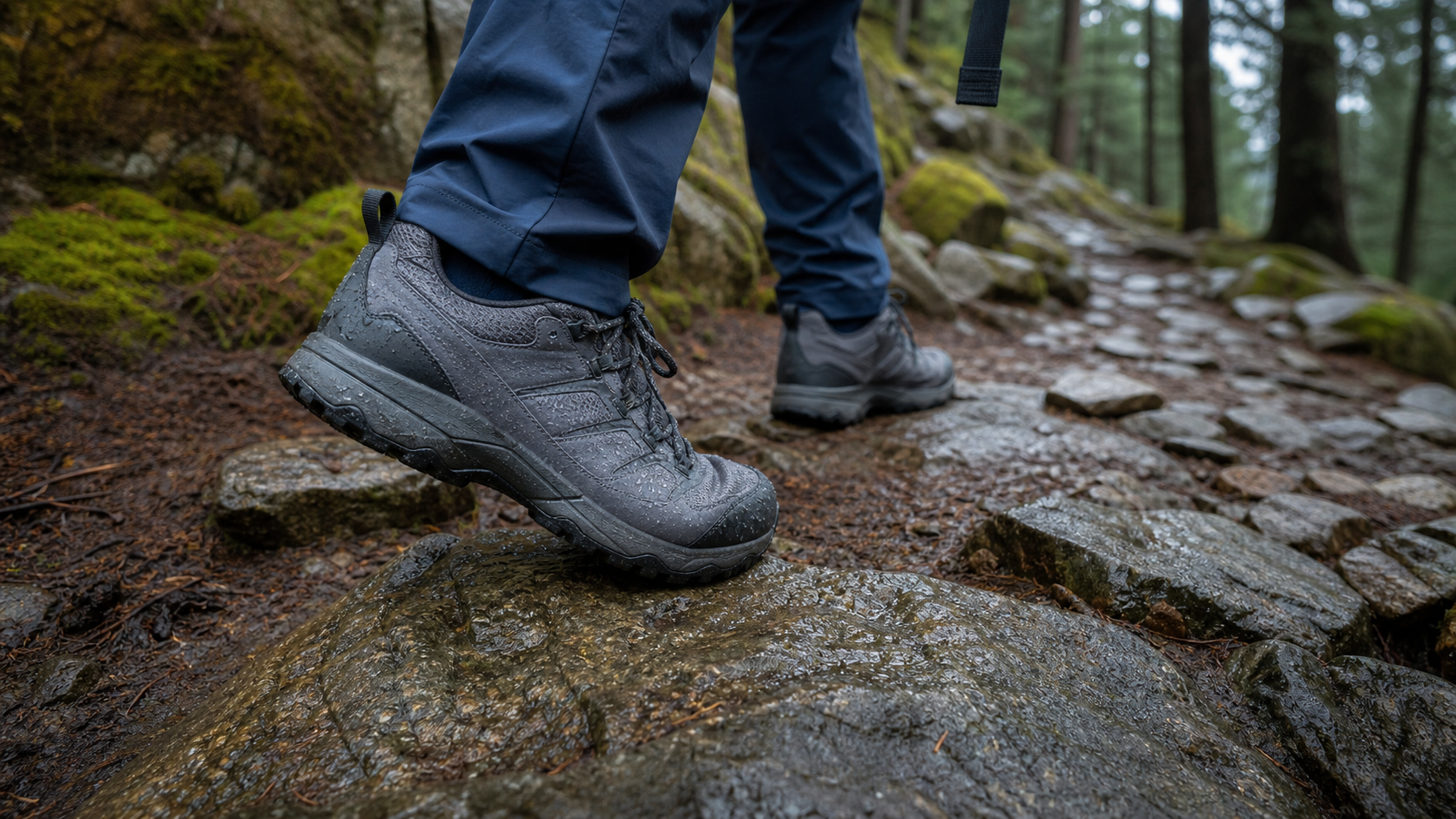
The Contagrip outsole with deep, multi-directional lugs is the main reason people choose this shoe for mixed terrain. Salomon’s chassis is designed to control rolling of the foot on uneven ground. Compared with highly cushioned shoes, the platform sits closer to the ground, which most users find more stable on rock and roots.
Fit
Salomon shoes have traditionally run narrow to standard through the midfoot. Many hikers with wide feet look for the wide version where available or choose a different brand. The Quicklace system tightens evenly and fast, but some people prefer conventional laces for fine-tuning pressure across the instep; check which lacing your chosen version uses.
Waterproofing Trade-offs
The GORE-TEX version keeps feet dry in wet grass, light rain and shallow puddles. In summer heat, a waterproof membrane can lead to sweaty feet. If your trails are mostly dry, or you expect deep crossings where water will enter over the top anyway, the non-waterproof version breathes better and dries faster.
Low vs. Mid
- Low: lighter, more agile; best for day hikes and well-maintained trails.
- Mid: more ankle coverage, keeps out debris, and can feel more secure with a loaded pack. A higher collar does not by itself prevent sprains; fit and footwork matter more.
How It Compares
| Shoe type | Strength | Weakness |
|---|---|---|
| Salomon X Ultra 5 | Precise, grippy, supportive for weight | Narrow fit for some; firm feel |
| Max-cushion hiking shoe | Soft impact, long-mile comfort | Less ground feel on technical terrain |
| Traditional boot | Support for heavy loads | Heavier, slower to dry |
Buying Tips
- Try on with hiking socks and walk on an incline board if the store has one.
- Check that your heel does not lift when walking uphill.
- Buy from a retailer with a generous return window so you can test indoors.
- Expect outsole life to vary widely with terrain and weight; abrasive rock wears lugs faster.
FAQs
Is this recommendation independent? Yes. TrekBench recommendations are edited independently and affiliate relationships do not decide our verdicts.
How should I use this guide? Use it to shortlist gear, then compare fit, return policies, local conditions, and your actual trip needs.