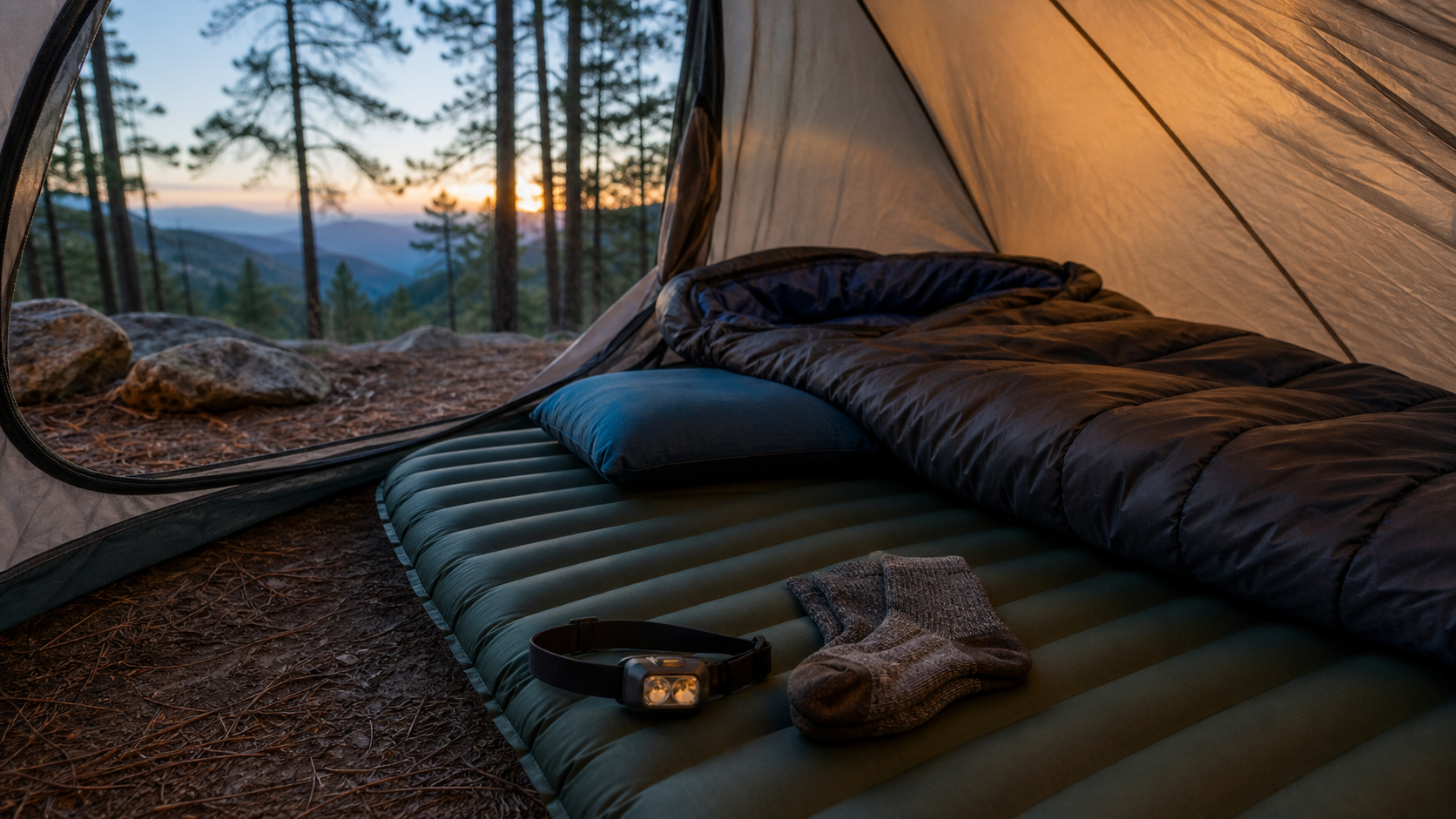
A warm sleeping bag cannot fix a poor pad, and a great pad cannot save a bag used below its comfort range. Sleep systems work best when the pieces are chosen together.
Quick verdict
Choose the pad first for ground insulation, then match the bag or quilt to expected nighttime lows. Small comfort upgrades often pay off more than shaving a few ounces.
What we looked for
For this camping piece, we focused on the details that matter on real weekends: packability, weather resistance, comfort after several hours of use, setup time, durability, and value. We favor gear that solves common trip problems without adding unnecessary bulk.
Pros
- Pad insulation matters as much as bag warmth
- A pillow improves repeat comfort on short trips
- Vent options help in changing temperatures
Tradeoffs
- Ultralight pads can be noisy
- Wide setups may not fit every tent floor
Who it is for
This guide is written for travelers, hikers, and campers who want dependable gear for weekend trips, national park travel, car camping, and light backcountry use. It is not aimed at expedition specialists or people chasing the absolute lightest possible kit at any cost.
How to choose
- Match the trip length. Weekend gear should be comfortable and repeatable, not just impressive on paper.
- Check the failure points. Zippers, poles, straps, buckles, waterproof coatings, battery covers, and seams usually matter more than headline specs.
- Think about storage. Good outdoor gear should be easy to dry, clean, recharge, repack, and use again next month.
- Buy for your weather. A desert road trip, a wet shoulder-season hike, and a humid family campsite need different tradeoffs.
Update note
TrekBench reviews are updated when product lines, availability, field notes, or reader questions change. We keep older recommendations visible when they still explain useful buying decisions.
How the Three Pieces Work Together
Your body loses heat in two directions at night: up into the air (managed by the bag or quilt) and down into the ground (managed by the pad). Ground loss is often underestimated, which is why a warm bag on a thin pad still feels cold.
Sleeping Pad R-Value
R-value measures resistance to heat flow. Since 2020, major manufacturers test pads with the ASTM F3340 standard, making ratings comparable across brands. Rough guidance: R 1–2 for warm summer nights, R 2–4 for three-season use, R 4–5+ for cold shoulder seasons and winter. R-values add when you stack pads, such as a closed-cell foam pad under an inflatable.
Sleeping Bag Temperature Ratings
Many bags use ISO 23537 (formerly EN 13537) ratings. The comfort rating is the temperature at which a typical cold sleeper is comfortable; the limit rating applies to a typical warm sleeper in a curled position. Choose based on the comfort rating if you sleep cold.
Down vs. Synthetic
| Down | Synthetic | |
|---|---|---|
| Warmth-to-weight | Excellent | Good |
| Packed size | Small | Larger |
| When damp | Loses loft (less with treated down) | Retains more warmth |
| Price | Higher | Lower |
Pillows
An inflatable pillow weighs little and packs small; a stuff sack filled with a fleece works in a pinch. Side sleepers usually need more height.
Tips for Warmer Nights
- Eat a snack with fat before bed.
- Wear dry socks and a hat.
- Vent the tent to reduce condensation.
- Use a bag liner for extra warmth and cleanliness.