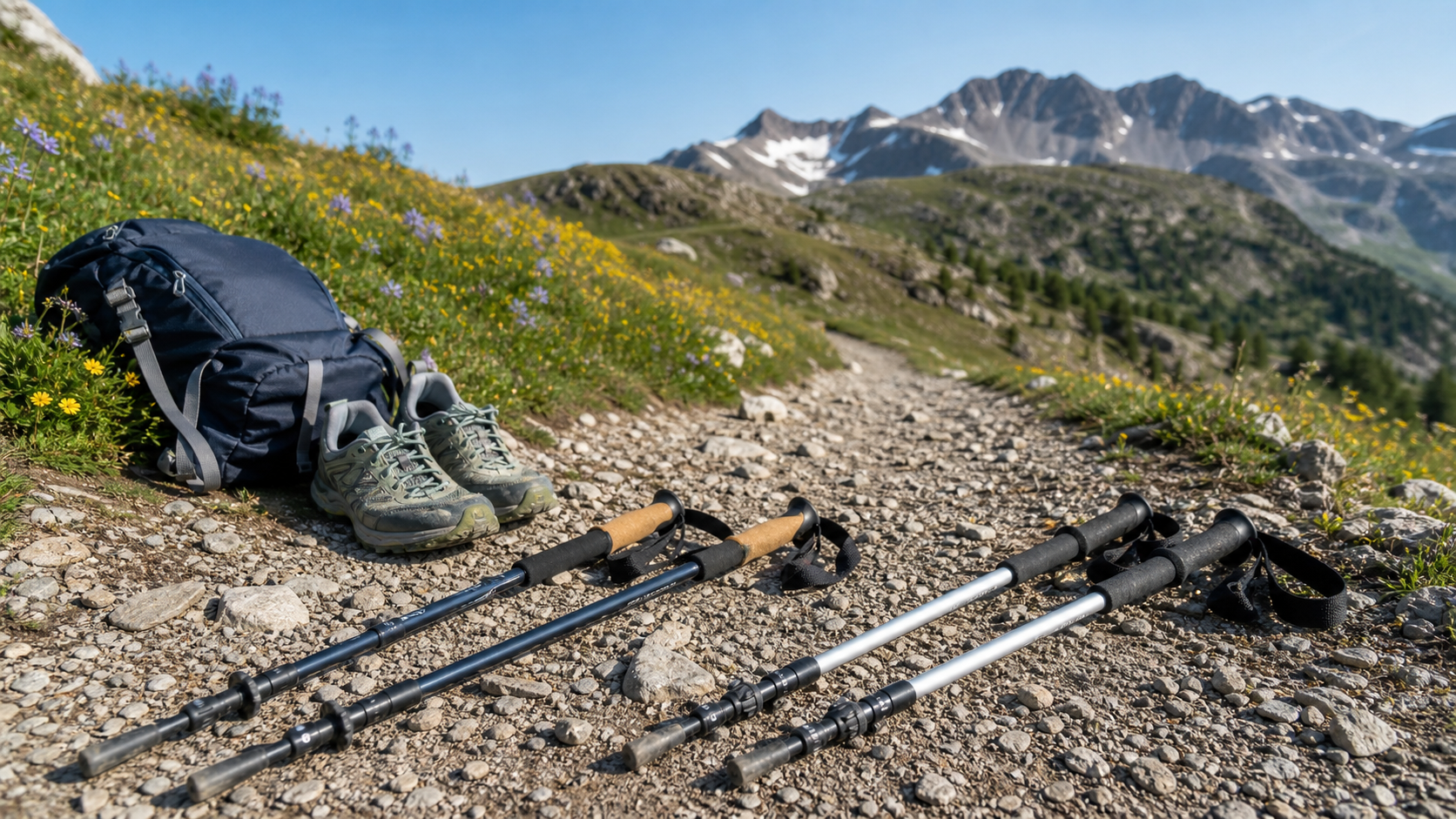
Trekking poles look similar until the trail gets rocky, wet, or long. Carbon and aluminum poles differ in weight, vibration feel, price, and how they fail under stress.
Quick verdict
Carbon is attractive for long-distance weight savings, but aluminum remains the safer value pick for rough trails, travel, and shared family use.
What we looked for
For this comparisons piece, we focused on the details that matter on real weekends: packability, weather resistance, comfort after several hours of use, setup time, durability, and value. We favor gear that solves common trip problems without adding unnecessary bulk.
Pros
- Carbon poles feel light and reduce swing fatigue
- Aluminum poles often bend before they break
- Grip shape matters on long descents
Tradeoffs
- Carbon can crack from sharp side impacts
- Cheap locks may slip regardless of material
Who it is for
This guide is written for travelers, hikers, and campers who want dependable gear for weekend trips, national park travel, car camping, and light backcountry use. It is not aimed at expedition specialists or people chasing the absolute lightest possible kit at any cost.
How to choose
- Match the trip length. Weekend gear should be comfortable and repeatable, not just impressive on paper.
- Check the failure points. Zippers, poles, straps, buckles, waterproof coatings, battery covers, and seams usually matter more than headline specs.
- Think about storage. Good outdoor gear should be easy to dry, clean, recharge, repack, and use again next month.
- Buy for your weather. A desert road trip, a wet shoulder-season hike, and a humid family campsite need different tradeoffs.
Update note
TrekBench reviews are updated when product lines, availability, field notes, or reader questions change. We keep older recommendations visible when they still explain useful buying decisions.
Material Basics
Carbon fiber poles are lighter and absorb more vibration, which many hikers find reduces hand and wrist fatigue on long days. Aluminum poles are heavier but tougher under sideways loads: aluminum tends to bend, while carbon can crack or snap if it is stressed sideways, for example when wedged between rocks.
Comparison
| Factor | Carbon | Aluminum |
|---|---|---|
| Weight per pair | Typically lighter | Heavier |
| Vibration | Damped | More “ringing” |
| Failure mode | Can snap | Bends, often still usable |
| Price | Higher | Lower |
| Best for | Long-distance, weight-conscious hikers | Rocky terrain, winter, budget |
Locking Mechanisms
External lever locks are easy to adjust with gloves and simple to tighten in the field. Twist locks are lighter but can slip if dirty or cold. Folding (Z-style) poles pack small for travel and running, but often have limited length adjustment.
Grips and Straps
Cork grips mold to your hand and handle sweat well; foam is soft and light; rubber suits cold weather but can cause sweaty hands. Extended foam below the grip lets you choke down on uphill traverses.
Setting the Right Length
On flat ground, set the pole so your elbow is bent near 90 degrees. Shorten slightly for climbs and lengthen for descents. See our trekking pole height guide for a fuller explanation.
Durability Tips
- Avoid levering your body weight sideways on a planted pole.
- Dry and separate sections after wet hikes.
- Replace worn carbide tips; rubber tip covers protect pavement and gear.