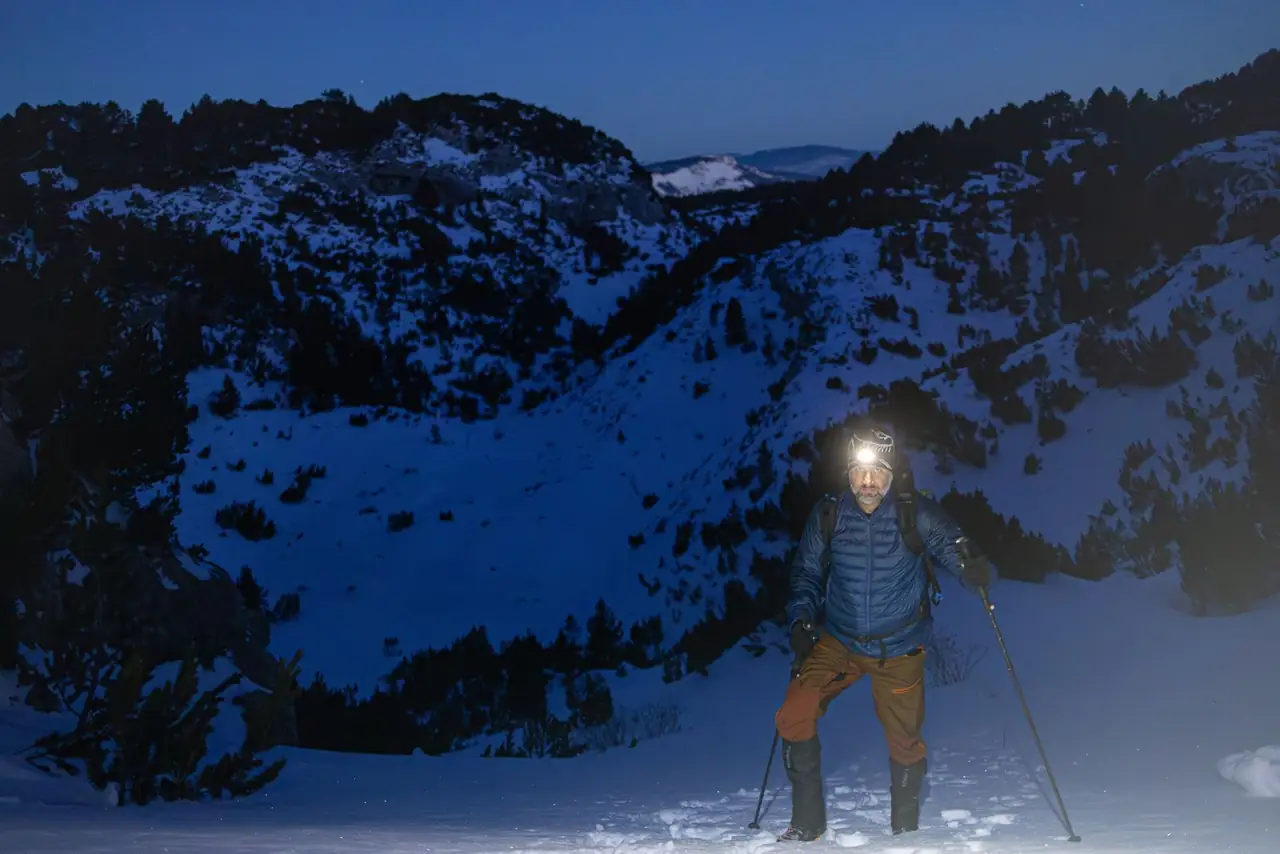
Bottom line: For most day hikers and weekend campers, a comfortable headlamp with a useful medium beam, a low mode, a simple lockout, dependable batteries, and basic weather resistance is more valuable than the highest advertised lumen number. The National Park Service includes a headlamp or flashlight in the Ten Essentials and recommends spare batteries. That makes reliability the first criterion, not brightness.
Start with the trip, not the specification
A headlamp used to find a tent zipper has a different job from one used to descend a rough trail after sunset. Before comparing models, name the hardest realistic task: reading in camp, following reflective trail markers, moving over roots and rocks, running, or keeping an emergency light in a day pack. Then choose enough beam and runtime for that task with margin.
This guide is editorial research, not a claim that TrekBench field-tested every lamp. Manufacturer runtime charts are useful, but they are measured under controlled conditions. Cold weather, old batteries, repeated high-mode use, and electronic step-down can shorten the experience you get on trail.
How many lumens do hikers need?
Lumens describe total light output, not how useful the beam looks on the ground. A broad 300-lumen flood can feel more comfortable at walking pace than a narrow 500-lumen spot. For camp chores and an emergency walk-out, a moderate output is usually enough. Faster travel, route finding across open ground, or technical terrain can justify more output, but only if the lamp can sustain it.
Ignore the maximum number until you find the medium setting. High mode often exists for short checks: identifying a trail sign, scanning a switchback, or locating a landmark. Medium is where you will spend most of the night. A good lamp makes that setting easy to reach and provides a believable runtime for it.
Flood, spot, and mixed beams
| Beam type | Best use | Trade-off |
|---|---|---|
| Wide flood | Camp tasks, walking, reading a map | Less reach down the trail |
| Narrow spot | Route finding and distant markers | Can create tunnel vision at close range |
| Mixed beam | General hiking and camping | Usually costs or weighs a little more |
| Red light | Preserving night adaptation around camp | Limited reach and poor color recognition |
A mixed beam is the safest one-lamp choice. It lights the ground in front of your feet without hiding the next bend. A dedicated red mode is useful when sharing a tent or reading a map, but it should not require cycling through full white output to reach it.
Battery system: rechargeable, replaceable, or hybrid
Rechargeable lamps are convenient for frequent use. Charge after each trip and you avoid a drawer full of partly used cells. The weakness is recovery: once the internal battery is empty, you need a power bank and time. Replaceable batteries are easier to restore immediately, and spare cells are simple to divide between group members.
A hybrid lamp accepts both a rechargeable pack and standard batteries. It is a strong choice for travel, cold conditions, and trips where wall power is uncertain. Check the exact compatible cells; “hybrid” does not mean every battery of the same shape is safe.
For emergency readiness, pack the spare separately and protect its contacts. A loose battery beside keys or metal tools can short. Check the lamp before leaving, and do not count a phone flashlight as your only illumination. National Park Service hiking guidance explicitly treats a separate light as essential.
Runtime is more complicated than one number
Some lamps reduce output as the battery drains. That is normal thermal and power management, but it means a headline such as “eight hours” may include many hours at a much dimmer level. Look for a runtime graph or a statement describing whether the lamp regulates brightness.
Use the medium-mode figure for planning, then add reserve. If your route could keep you out for three hours after dark, a lamp that barely claims three hours is not enough. Carry a second small light or spare battery on consequential routes.
Controls should work with cold or wet hands
A single button can be excellent if the sequence is logical. It can also be maddening when every press cycles through strobe, red, boost, and lockout. Try to answer four questions from the manual before buying:
- Can you turn it on at a low level without flashing the campsite?
- Can you return to the last useful setting?
- Can you lock it for transport?
- Can you operate it with gloves?
A lockout matters more than it sounds. A lamp that switches on inside a pack can arrive empty and hot. Physical rotation locks are easy to understand; electronic locks are fine if they are hard to trigger by accident and easy to confirm.
Weather resistance and durability
An IP rating separates dust and water protection. Do not treat “weather resistant” as a standard. For normal hiking, you want a lamp that tolerates rain and splashes. If paddling, canyon travel, or repeated storms are part of the plan, choose stronger protection and read the manufacturer’s limits. Water resistance can decline after impacts, a damaged seal, or improper charging-port closure.
Also inspect the hinge and battery door. Those small moving parts fail before the LED does. A simple tilt mechanism with firm detents is preferable to a loose hinge that drops the beam toward your boots.
Comfort: weight is only part of it
A very light lamp can still bounce if the battery sits entirely at the front. A heavier lamp can feel stable when the battery is balanced at the rear and the strap fits well. Walk around the room, look down, and shake your head gently. The housing should not slide, and the buckle should not press under a hood.
Runners may benefit from a top strap or rear battery. Campers usually prefer a simpler band. If you wear a helmet, verify that the strap range and grip pattern work with it rather than assuming any headlamp will stay put.
A practical decision matrix
| User | Prioritize | Skip |
|---|---|---|
| Day hiker | Lockout, low weight, replaceable or hybrid power | Extreme maximum output |
| Weekend camper | Flood beam, red mode, comfortable strap | Long-range spot-only lamps |
| Night hiker | Mixed beam, sustained medium runtime, spare light | Models with unclear runtime behavior |
| Runner | Stable fit, balanced battery, easy controls | Heavy front housings |
| Travel kit | Common batteries, compact size, simple lock | Proprietary charging without backup |
Pre-trip headlamp check
- Charge the battery or install fresh cells.
- Run every mode and confirm the switch is not sticky.
- Inspect the strap, hinge, battery door, and charging-port cover.
- Pack a compatible spare battery or a second small light.
- Activate transport lockout.
- Put the lamp where it can be reached before dark, not at the bottom of the pack.
Frequently asked questions
Is 300 lumens enough for hiking?
Often, yes, for normal walking with a well-shaped beam. Terrain, speed, weather, and beam pattern matter more than one threshold.
Do I need red light?
It is useful around camp and when sharing a tent, but it is not essential for every buyer. A very low white mode can cover many of the same tasks.
Are rechargeable headlamps reliable?
Yes, if charged and checked. For longer or remote trips, a replaceable-battery backup or hybrid system makes recovery easier.
Should I carry two lights?
For night travel where a failure would create real risk, yes. A small backup adds little weight and protects against a dead battery, broken strap, or lost lamp.