Posted on

Fleece vs Synthetic Midlayer: What to Wear When Temperatures Swing

TrekBench Midlayers
Affiliate disclosure: TrekBench may earn a commission when readers buy through some merchant links. Our recommendations remain independently edited, and commissions do not affect verdicts.

Midlayers are where many hikers overpack. Fleece and synthetic insulation both work, but they solve different temperature problems and layer differently under a shell.

Quick verdict

Use fleece for steady movement and synthetic insulation for chilly breaks. In shoulder season, many hikers carry one light fleece plus a compact puffy.

What we looked for

For this comparisons piece, we focused on the details that matter on real weekends: packability, weather resistance, comfort after several hours of use, setup time, durability, and value. We favor gear that solves common trip problems without adding unnecessary bulk.

Pros

  • Fleece breathes well during active hiking
  • Synthetic insulation is warmer during stops
  • Both dry faster than cotton layers

Tradeoffs

  • Bulky fleece can crowd a rain shell
  • Insulated jackets can overheat while climbing

Who it is for

This guide is written for travelers, hikers, and campers who want dependable gear for weekend trips, national park travel, car camping, and light backcountry use. It is not aimed at expedition specialists or people chasing the absolute lightest possible kit at any cost.

How to choose

  • Match the trip length. Weekend gear should be comfortable and repeatable, not just impressive on paper.
  • Check the failure points. Zippers, poles, straps, buckles, waterproof coatings, battery covers, and seams usually matter more than headline specs.
  • Think about storage. Good outdoor gear should be easy to dry, clean, recharge, repack, and use again next month.
  • Buy for your weather. A desert road trip, a wet shoulder-season hike, and a humid family campsite need different tradeoffs.

Update note

TrekBench reviews are updated when product lines, availability, field notes, or reader questions change. We keep older recommendations visible when they still explain useful buying decisions.

Author: TrekBench Editorial
Our editorial desk focuses on practical travel, camping, hiking, backpacks, footwear, apparel, and outdoor electronics for real-world trips.

Fleece and Synthetic Insulation Explained

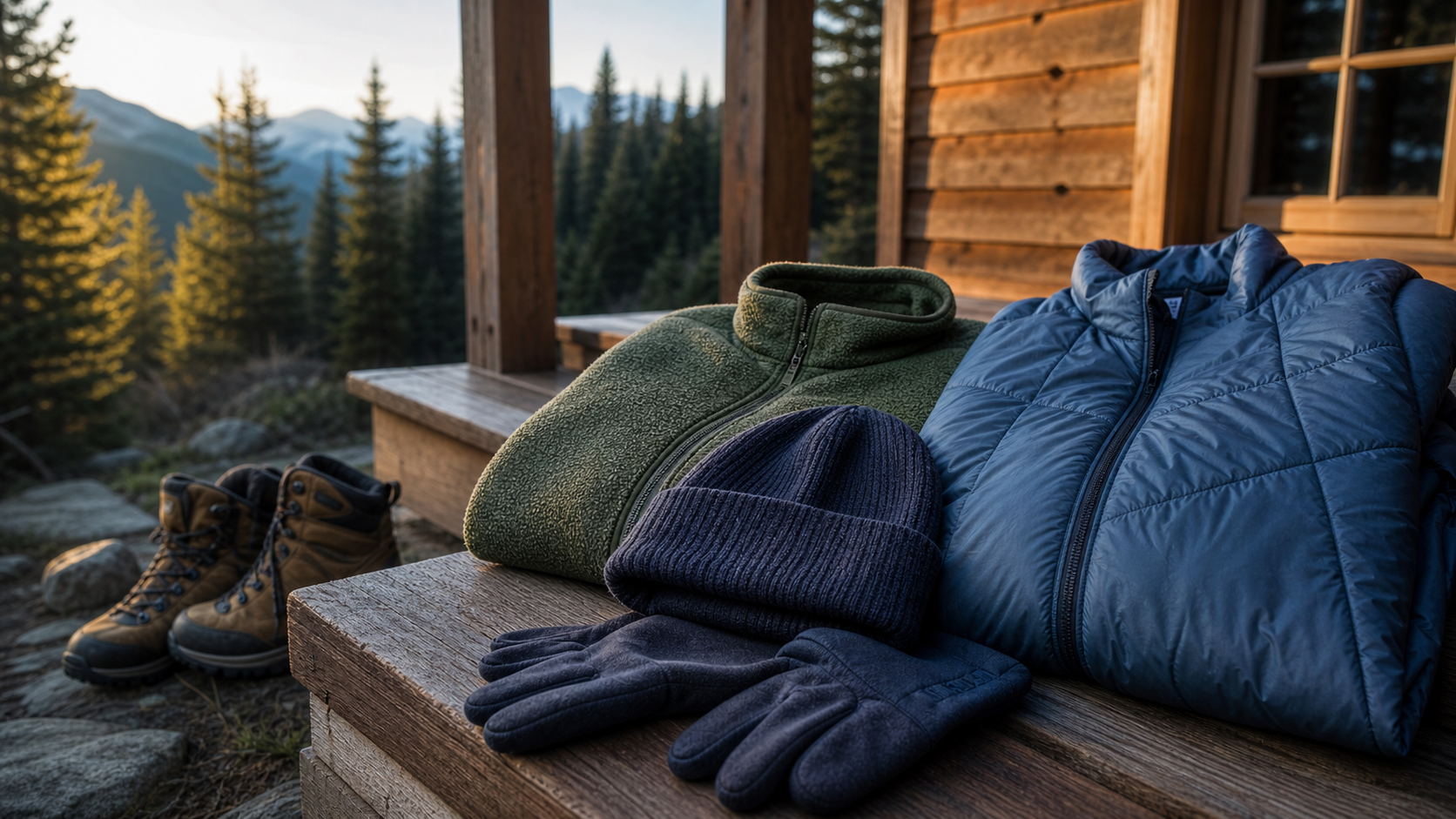
Fleece is a knitted polyester fabric that traps air. It breathes well, stays warm when damp, and handles abrasion, but blocks little wind and is bulky for its warmth. Synthetic insulated jackets use polyester fill (such as PrimaLoft or Coreloft) inside a wind-resistant shell. They provide more warmth for their weight, pack smaller, and block wind, but are less breathable when you are working hard.

Comparison

FleeceSynthetic jacket
Breathability while movingExcellentModerate (active insulation is better)
Wind resistanceLowGood
Warmth per weightModerateHigher
PackabilityBulkyCompressible
DurabilityHighShell can snag

When Temperatures Swing

For cold mornings and warm afternoons, a light grid fleece (100-weight) is easy to wear while moving. For stops, summits and camp, a synthetic jacket over it adds warmth quickly. “Active insulation” jackets (lightly insulated, highly breathable) try to bridge both roles.

Layering Strategy

  1. Base layer that wicks sweat.
  2. Midlayer while moving (fleece or active insulation).
  3. Puffy for stops.
  4. Shell for wind and rain.

Add or remove a layer before you get sweaty or chilled, not after.
Posted on

Carry-On Backpack vs Rolling Duffel for Outdoor Travel

TrekBench Daypacks
Affiliate disclosure: TrekBench may earn a commission from some merchant links. Our recommendations remain independently edited and commissions do not affect verdicts.

Outdoor travel often mixes airports, shuttles, gravel lots, and stairs. The right bag depends on how often you carry versus roll.

What matters on a real trip

  • Comfort and usability after the first hour matter more than novelty features.
  • Common failure points include zippers, buckles, locks, seams, coatings, battery doors, and charging ports.
  • Packed size and storage determine whether the item comes on the next trip.
  • Weather and cleaning needs should match the conditions readers actually face.
  • Value means reliable repeat use, not only the lowest checkout price.

Buying notes

We focus on the parts that affect repeat use: comfort after the first hour, setup friction, packed size, weather tolerance, durability at common failure points, cleaning and storage, and whether the item makes sense for weekend travel rather than expedition-only use.

Who should consider it

This article is written for hikers, campers, and travelers who want practical outdoor gear for weekends, road trips, light backpacking, and national-park style travel. Readers planning remote expeditions should use this as a starting point and check specialist guidance before relying on any single item.

TrekBench verdict

Backpacks win rough transfers; rolling duffels win heavy loads and smooth routes.

Author: TrekBench Editorial
Our editorial desk covers travel, camping, hiking, packs, footwear, apparel, and outdoor electronics for real-world trips.

The Core Question: Carry or Roll?

Outdoor trips often involve surfaces wheels hate: gravel parking lots, dirt roads, stairs, and grass. If more than a short part of the journey involves those, a backpack-style bag is usually easier. If most of your travel is airport corridors and paved sidewalks, wheels save your back.

Comparison

FactorCarry-on backpackRolling duffel
Rough groundExcellentPoor
Airport comfortOK with good harnessExcellent
Weight of empty bagLighterHeavier (wheels, frame)
Capacity in carry-on sizeMore usableWheels use space
Bulky gear (boots, helmets)LimitedEasier

What to Look For

  • Backpacks: padded hip belt, stowable straps, clamshell opening, and a laptop sleeve if needed.
  • Rolling duffels: large wheels, durable fabric (high-denier nylon or TPU coatings), and backpack straps on some hybrids.

Hybrid Options

Some duffels add stow-away shoulder straps, and some wheeled bags include backpack harnesses. Hybrids are heavier but useful if your trip includes both airports and trails.

Airline Sizing

Carry-on limits vary by airline and country. Measure your bag fully packed, including wheels and handles.

Posted on

Garmin inReach Mini 2 Review: Safety Device or Nice-to-Have?

Garmin inReach Mini 2 Review: Safety Device or Nice-to-Have? featured image

Affiliate disclosure: TrekBench may earn a commission from some merchant links. Our recommendations remain independently edited and commissions do not affect verdicts.

Author: Nina Hart · Last updated: Jul 3, 2026

An outdoor electronics review covering satellite messaging, battery life, subscription value, app flow, and who really needs a communicator.

Quick Verdict

A satellite communicator is not exciting gear, but for solo hikers, remote travelers, and poor-signal routes, it can be one of the most important items in the pack.

What We Evaluate

Battery life, message reliability, app clarity, subscription cost, SOS workflow, weather access, charging, and how easily the device can be used when stressed.

Who It Is For

Solo hikers, remote road trippers, backcountry travelers, photographers, and anyone regularly outside mobile coverage.

Who Should Avoid

Casual park walkers and people who stay near reliable service may be better served by a phone, power bank, and shared itinerary.

Research Summary

The key question is not whether the device is clever; it is whether it is simple enough to trust when weather, fatigue, or navigation stress appear.

Verdict

If your routes often leave phone service, satellite communication moves from luxury to risk-management tool.

What the inReach Mini 2 Actually Does

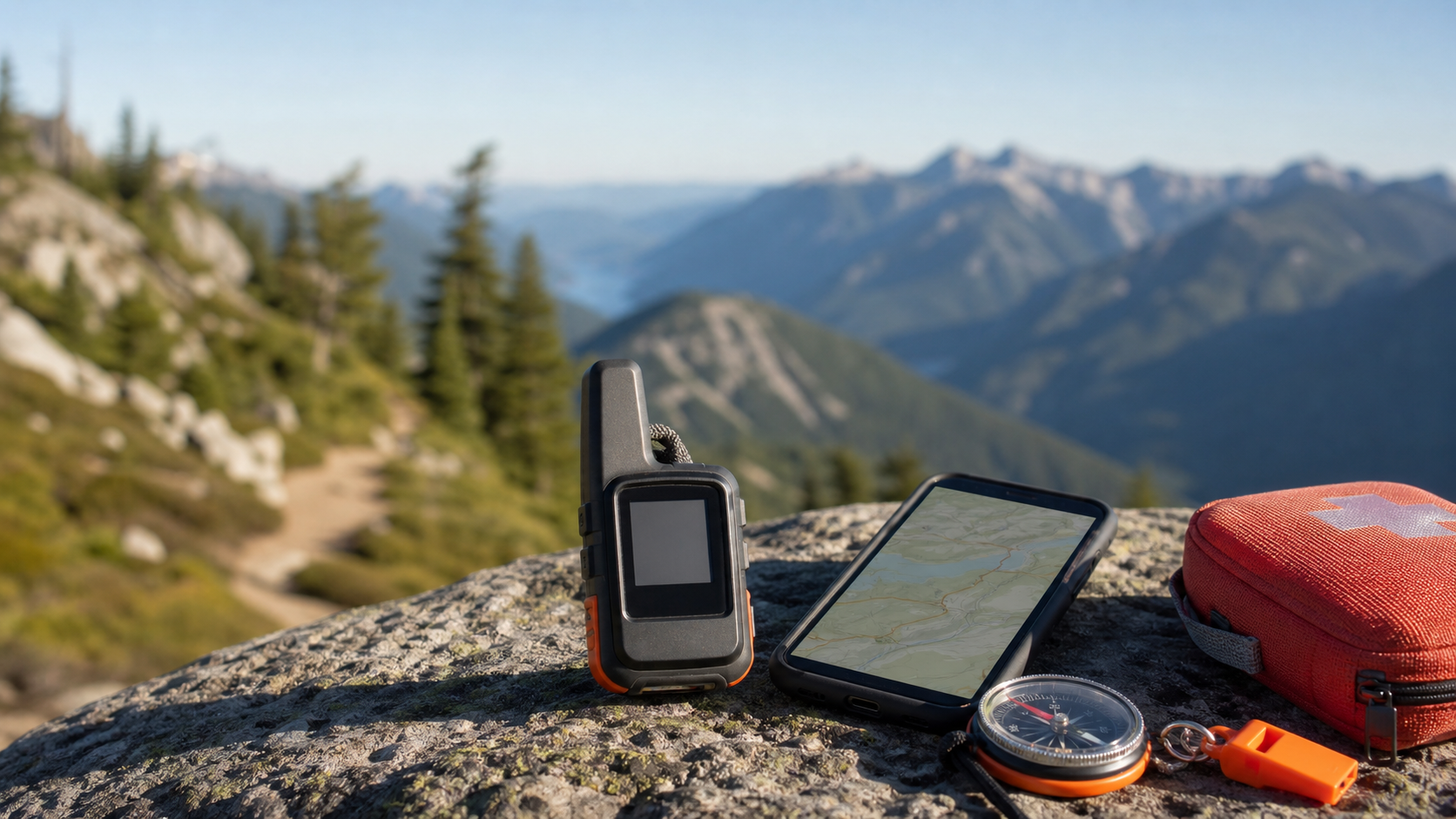
The Garmin inReach Mini 2 is a two-way satellite communicator that uses the Iridium network, which covers the whole globe including the poles. That matters because it works in canyons, high mountains, and remote coastlines where there is no cell signal at all. Its core functions are an interactive SOS that connects you to Garmin’s 24/7 response coordination center, two-way text messaging, location tracking that friends can follow on a MapShare page, and basic weather forecasts delivered by satellite.

Compared with the original Mini, the Mini 2 added multi-GNSS positioning (GPS, Galileo and others), a TracBack route feature that can guide you back along your recorded path, a digital compass, and a USB-C port. Garmin lists battery life of up to about 14 days in its default 10-minute tracking mode, and much longer in power-saving configurations. The device weighs roughly 100 grams, so it disappears in a hip-belt pocket or clips to a shoulder strap.

Satellite Messenger vs. PLB: The Key Trade-off

A personal locator beacon (PLB) sends a one-way distress signal to government search-and-rescue via the COSPAS-SARSAT system. It needs no subscription and usually has higher transmit power, but it cannot tell rescuers what is wrong and cannot receive a reply. An inReach can. Two-way messaging lets you say “ankle injury, can walk slowly” or “stuck by river crossing, safe, will wait,” which can change how a rescue is coordinated, and it lets you send routine check-ins that keep family from triggering an unnecessary search when you are simply late.

The cost of that flexibility is an ongoing subscription. Garmin offers monthly and annual plans with different message and tracking allowances, and prices change over time, so check Garmin’s current plan page before buying. If you only take a few remote trips a year, a flexible monthly plan you activate seasonally may cost less than an annual plan.

Who Benefits Most

  • Solo hikers and trail runners on routes without reliable coverage.
  • Backpackers and thru-hikers who want daily check-ins with family.
  • Paddlers, hunters, and backcountry skiers who go beyond cell range regularly.
  • Parents or partners who want shared tracking rather than a one-way beacon.

If your hiking is mostly on popular trails with good phone coverage, a modern smartphone with satellite SOS may cover emergencies. Check whether your phone model and region support that feature, and remember that phone batteries drain much faster than a dedicated communicator.

Practical Setup Tips

  1. Activate before the trip. Activation and syncing contacts through the Garmin Explore app or website requires internet.
  2. Preset messages. Preset messages are typically free to send under most plans and are fast to use with cold hands.
  3. Test at home. Send a test message from an open sky location so you know how long a message takes to go through.
  4. Carry it on your body. A device in the bottom of a pack is useless if you are separated from your pack after a fall.
  5. Know the SOS cover. Lift the SOS cover only in a real emergency; once triggered, stay in communication with the response center.

Limitations to Know

Satellite messages are not instant; they can take a minute or more, and dense tree cover or deep canyons can slow transmission. The screen is small, so composing custom messages is easier on a paired phone. Navigation features are basic compared with a dedicated GPS handheld or watch; most people use the Mini 2 for communication and a phone or watch for maps. Finally, a communicator does not replace route planning, a paper map, or telling someone your itinerary.

FAQs

Is this recommendation independent? Yes. TrekBench recommendations are edited independently and affiliate relationships do not decide our verdicts.

How should I use this guide? Use it to shortlist gear, then compare fit, return policies, local conditions, and your actual trip needs.

Posted on

Best Travel Daypacks for Airport-to-Trail Weekends

TrekBench Daypacks
Affiliate disclosure: TrekBench may earn a commission when readers buy through some merchant links. Our recommendations remain independently edited, and commissions do not affect verdicts.

The best travel daypack is not always the most technical hiking pack. It needs to fit under a seat, carry a jacket and camera, and still feel comfortable on a trail overlook.

Quick verdict

Look for a 20-28L pack with clean organization, comfortable straps, and enough weather resistance for a wet transfer or trail afternoon.

What we looked for

For this buying-guides piece, we focused on the details that matter on real weekends: packability, weather resistance, comfort after several hours of use, setup time, durability, and value. We favor gear that solves common trip problems without adding unnecessary bulk.

Pros

  • Clamshell access helps with travel packing
  • A real water bottle pocket is still useful
  • Padded laptop sleeves can double as map storage

Tradeoffs

  • Too many admin pockets add weight
  • Pure hiking packs can look awkward in cities

Who it is for

This guide is written for travelers, hikers, and campers who want dependable gear for weekend trips, national park travel, car camping, and light backcountry use. It is not aimed at expedition specialists or people chasing the absolute lightest possible kit at any cost.

How to choose

  • Match the trip length. Weekend gear should be comfortable and repeatable, not just impressive on paper.
  • Check the failure points. Zippers, poles, straps, buckles, waterproof coatings, battery covers, and seams usually matter more than headline specs.
  • Think about storage. Good outdoor gear should be easy to dry, clean, recharge, repack, and use again next month.
  • Buy for your weather. A desert road trip, a wet shoulder-season hike, and a humid family campsite need different tradeoffs.

Update note

TrekBench reviews are updated when product lines, availability, field notes, or reader questions change. We keep older recommendations visible when they still explain useful buying decisions.

Author: TrekBench Editorial
Our editorial desk focuses on practical travel, camping, hiking, backpacks, footwear, apparel, and outdoor electronics for real-world trips.

What Makes a Good Travel Daypack

A travel daypack sits between a city backpack and a hiking pack. It should fit under an airline seat, carry a laptop or tablet on travel days, and carry a jacket, water, and snacks on the trail.

Key Features

  • Capacity: 18–28 liters is the sweet spot.
  • Under-seat size: many airlines’ personal item limits are around 18 x 14 x 8 inches; verify yours.
  • Hip belt or sternum strap: improves stability on trail.
  • Water bottle pockets: deep enough to hold a 1 L bottle securely.
  • Padded sleeve: useful for electronics in transit.
  • Materials: high-denier nylon or recycled polyester with water-resistant coating.

Pack Types

TypeGood forTrade-off
Hiking daypack (20–25 L)Trail comfort, ventilationLess organization for tech
Travel daypackAirports, cities, light trailsLess support for heavy loads
Packable daypackFolds into luggageMinimal structure

Security Tips

Lockable zippers and hidden pockets help in crowded areas. Keep passports and wallets in an internal pocket against your back.

Fit

Even small packs fit better when shoulder straps sit close to the neck without pressure and the load rides close to your back.

Posted on

Satellite Messenger vs Personal Locator Beacon for Weekend Trips

TrekBench Camp Kitchen
Affiliate disclosure: TrekBench may earn a commission from some merchant links. Our recommendations remain independently edited and commissions do not affect verdicts.

Satellite messengers and PLBs answer different safety questions: ongoing communication, emergency alerts, subscription cost, and simplicity.

What matters on a real trip

  • Comfort and usability after the first hour matter more than novelty features.
  • Common failure points include zippers, buckles, locks, seams, coatings, battery doors, and charging ports.
  • Packed size and storage determine whether the item comes on the next trip.
  • Weather and cleaning needs should match the conditions readers actually face.
  • Value means reliable repeat use, not only the lowest checkout price.

Buying notes

We focus on the parts that affect repeat use: comfort after the first hour, setup friction, packed size, weather tolerance, durability at common failure points, cleaning and storage, and whether the item makes sense for weekend travel rather than expedition-only use.

Who should consider it

This article is written for hikers, campers, and travelers who want practical outdoor gear for weekends, road trips, light backpacking, and national-park style travel. Readers planning remote expeditions should use this as a starting point and check specialist guidance before relying on any single item.

TrekBench verdict

Choose based on route remoteness and communication needs, not just device popularity.

Author: TrekBench Editorial
Our editorial desk covers travel, camping, hiking, packs, footwear, apparel, and outdoor electronics for real-world trips.

How the Systems Differ

A personal locator beacon (PLB) transmits a 406 MHz distress signal to the international COSPAS-SARSAT satellite system, which relays your location to government search-and-rescue authorities. PLBs need no subscription, but in the US they must be registered with NOAA, and registration is free. A satellite messenger (Garmin inReach, ZOLEO, SPOT and others) uses commercial satellite networks for SOS plus, on two-way devices, text messaging, tracking, and weather. These require a paid service plan.

Comparison

PLBSatellite messenger
SubscriptionNoneRequired
Two-way messagingNoYes (on two-way models)
Non-emergency check-insNoYes
BatteryLong shelf life, single-use emergency transmitRechargeable, needs management
Rescue routingGovernment SARPrivate coordination center that alerts SAR

Which to Choose

Choose a PLB if you want a simple, low-maintenance last resort and rarely need to communicate otherwise. Choose a satellite messenger if you want to send “I’m OK” updates, coordinate with family, or describe the nature of an emergency. Some hikers on very remote trips carry both.

Smartphone Satellite SOS

Some recent smartphones offer emergency satellite messaging in supported countries. It can be a useful backup, but coverage, cost after the free period, and battery life vary. Check your phone’s documentation rather than assuming it replaces a dedicated device.

Good Practice

  • Register PLBs and keep contact info updated.
  • Carry the device on your body, not deep in a pack.
  • Leave a trip plan with someone at home either way.
Posted on

Merrell Moab vs Hoka Anacapa: Comfort, Grip, and Fit

Merrell Moab vs Hoka Anacapa: Comfort, Grip, and Fit featured image

Affiliate disclosure: TrekBench may earn a commission from some merchant links. Our recommendations remain independently edited and commissions do not affect verdicts.

Author: Evan Brooks · Last updated: Jun 30, 2026

A hiking footwear comparison for readers choosing between traditional support and cushioned modern trail comfort.

Comparison Verdict

Traditional hiking shoes tend to feel familiar and planted, while cushioned fast-hiking designs can feel smoother over long easy miles.

Comfort

Comfort depends on foot shape, midsole feel, heel hold, and how the shoe behaves after several hours, not just how soft it feels in the first minute.

Grip and Stability

Grip must be judged on wet rock, dusty trail, roots, and downhill braking. Stability matters most when tired feet get sloppy.

Fit Notes

Readers with wide feet, narrow heels, or arch sensitivity should treat fit as the deciding factor.

Who Should Choose Traditional Support

Choose a more classic hiking shoe if you value predictable structure, durable uppers, and a grounded trail feel.

Who Should Choose Cushioning

Choose a cushioned platform if your hikes involve long approaches, hard-packed trails, and comfort-first travel days.

Two Different Design Philosophies

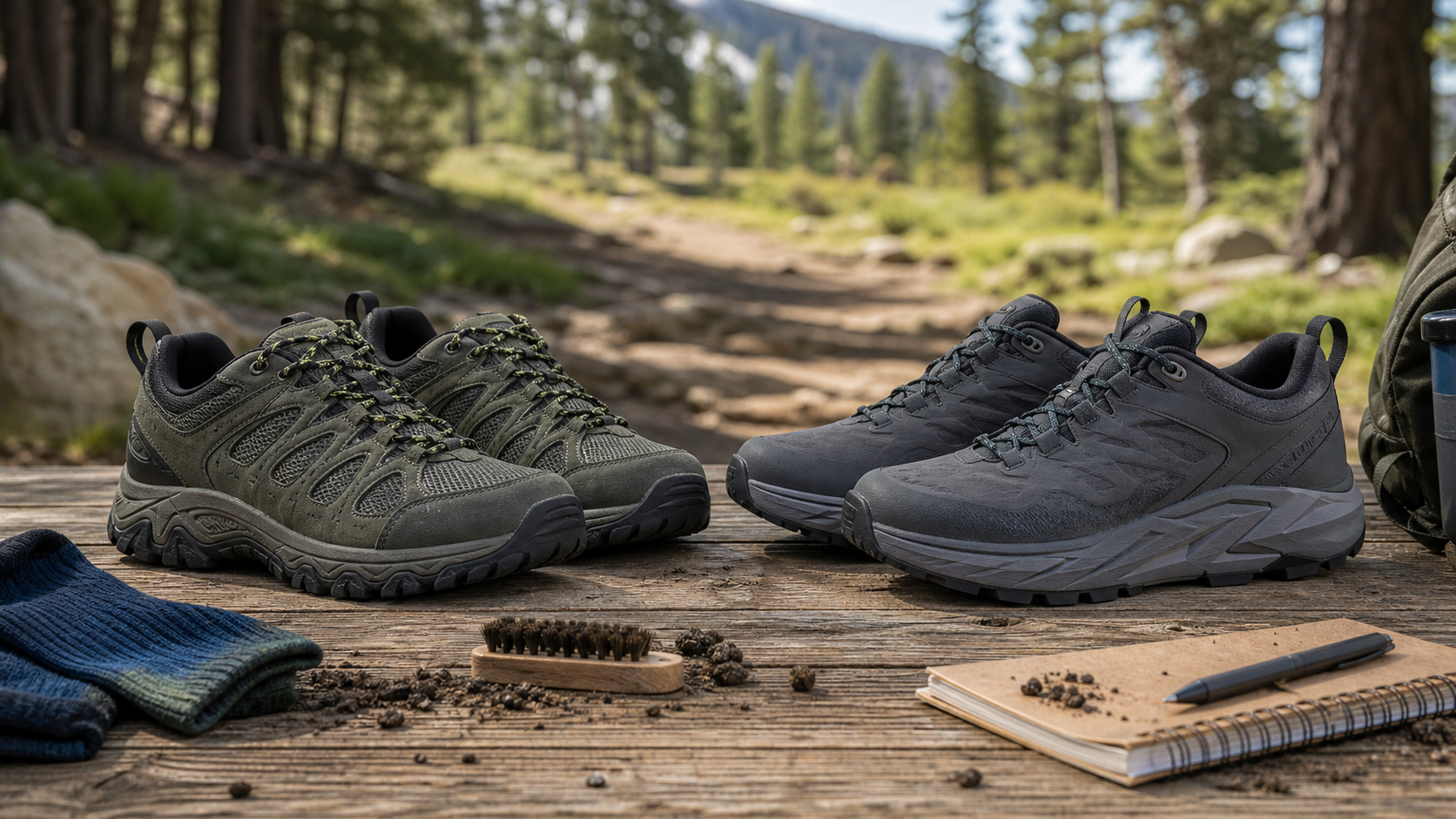
The Merrell Moab line has been one of the best-selling hiking shoes for well over a decade. Its design is traditional: a supportive midsole with a heel cup, a Vibram outsole, and a fit that many people with average to slightly wide feet find comfortable from the first wear. The Hoka Anacapa series takes the brand’s running-shoe approach to hiking: a thicker, softer, rockered midsole that reduces impact and helps roll the foot forward, often with a more modern, lighter upper.

Neither is objectively better. The right pick depends on your feet, your terrain, and what kind of comfort you value: stable and grounded, or cushioned and smooth.

Comfort and Cushioning

Readers and reviewers consistently describe the Moab as comfortable with little break-in, with a moderate cushion that feels firm compared with Hoka. The Anacapa’s higher stack absorbs more impact on hard-packed trails and long descents, which many hikers with sore knees or plantar fasciitis appreciate. The trade-off is ground feel: a high stack can feel less precise on uneven, rocky terrain, and some hikers feel less stable when the foot sits higher above the ground.

Grip and Stability

Both lines use Vibram rubber outsoles in most versions. Moab lugs are well suited to mixed dirt and rock, while Anacapa versions typically have multi-directional lugs suited to general trail use. Stability comes from different places: the Moab relies on a structured heel and a lower platform; the Anacapa relies on a wide base and rocker geometry. On off-camber ground, a lower shoe is usually easier to control.

Fit Notes

  • Moab: generally a roomy toe box; wide sizes are widely available.
  • Anacapa: a more performance-shaped fit; wide versions exist for some models.
  • Try shoes later in the day when feet are slightly swollen, with the socks you hike in.
  • Leave about a thumb’s width of space in front of the longest toe for descents.

Waterproof vs. Breathable Versions

Both lines come in waterproof (often GORE-TEX) and non-waterproof versions. Waterproof membranes keep out puddles and morning dew but trap heat and take longer to dry once water gets in over the collar. In hot, dry climates or for river-crossing routes, a breathable mesh version often ends up more comfortable.

How to Decide

If you…Lean toward
Want a familiar, stable shoe with easy fitMerrell Moab
Have joint pain or hike long hard-packed milesHoka Anacapa
Hike rocky, technical, off-camber trailsMoab (lower platform)
Prefer lighter, running-shoe feelAnacapa
Have wide feet and want many size optionsMoab

Prices and current versions change often; check both brands’ sites and retailer return policies so you can try them on at home.

FAQs

Is this recommendation independent? Yes. TrekBench recommendations are edited independently and affiliate relationships do not decide our verdicts.

How should I use this guide? Use it to shortlist gear, then compare fit, return policies, local conditions, and your actual trip needs.

Posted on

GPS Watch vs Handheld Navigator: What Hikers Actually Need

TrekBench Navigation
Affiliate disclosure: TrekBench may earn a commission when readers buy through some merchant links. Our recommendations remain independently edited, and commissions do not affect verdicts.

Navigation gear is easy to overbuy. A GPS watch, phone app, paper map, and handheld navigator all solve different problems, and the right setup depends on route risk and battery discipline.

Quick verdict

For marked day hikes, a phone map plus watch is often enough. For remote terrain, add a paper map and a dedicated backup with fresh batteries.

What we looked for

For this comparisons piece, we focused on the details that matter on real weekends: packability, weather resistance, comfort after several hours of use, setup time, durability, and value. We favor gear that solves common trip problems without adding unnecessary bulk.

Pros

  • Watches are great for pace, distance, and quick checks
  • Handheld units offer better controls with gloves
  • Paper maps still matter when electronics fail

Tradeoffs

  • Small screens limit route planning
  • Satellite features can increase subscription cost

Who it is for

This guide is written for travelers, hikers, and campers who want dependable gear for weekend trips, national park travel, car camping, and light backcountry use. It is not aimed at expedition specialists or people chasing the absolute lightest possible kit at any cost.

How to choose

  • Match the trip length. Weekend gear should be comfortable and repeatable, not just impressive on paper.
  • Check the failure points. Zippers, poles, straps, buckles, waterproof coatings, battery covers, and seams usually matter more than headline specs.
  • Think about storage. Good outdoor gear should be easy to dry, clean, recharge, repack, and use again next month.
  • Buy for your weather. A desert road trip, a wet shoulder-season hike, and a humid family campsite need different tradeoffs.

Update note

TrekBench reviews are updated when product lines, availability, field notes, or reader questions change. We keep older recommendations visible when they still explain useful buying decisions.

Author: TrekBench Editorial
Our editorial desk focuses on practical travel, camping, hiking, backpacks, footwear, apparel, and outdoor electronics for real-world trips.

Watch vs. Handheld: Different Strengths

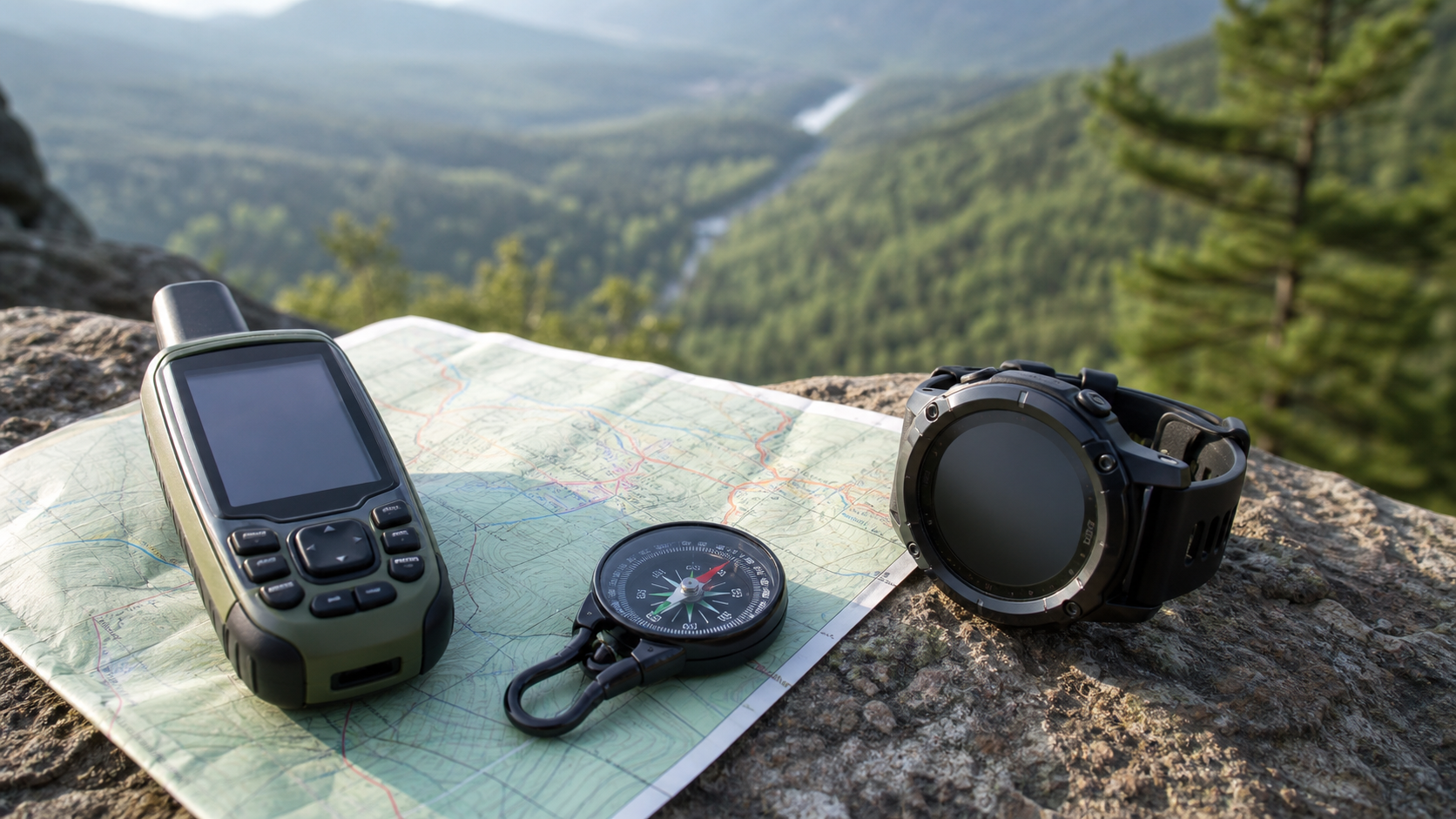
GPS watches (Garmin Fenix and Instinct, Coros, Suunto and others) put your location, elevation, breadcrumb track and often topo maps on your wrist. Handheld GPS units (such as the Garmin GPSMAP and eTrex lines) have larger screens, physical buttons, longer battery life on replaceable batteries in some models, and stronger antennas in many cases.

Comparison

FactorGPS watchHandheld GPS
Screen sizeSmallLarger, easier to read maps
ConvenienceAlways on wristMust be pulled out
BatteryDays to weeks depending on GPS modeLong; some use AA batteries
Fitness featuresHeart rate, training metricsMinimal
Glove useSmall buttonsLarge buttons

Where the Phone Fits

A smartphone with offline maps is now the most common navigator, with the best screen and maps. Its weaknesses are battery life, fragility, and cold. Many hikers use a phone for planning and detailed navigation, and a watch for quick checks and track recording.

Multi-band GNSS

Newer watches and handhelds support multi-band (dual-frequency) GNSS, which can improve accuracy near cliffs, in canyons and under tree cover, at the cost of more battery drain.

Choosing

Pick a watch if you want fitness tracking plus quick navigation. Pick a handheld if you navigate off-trail often, travel in cold conditions, or need long battery life. In either case, carry a paper map and compass as backup.

Posted on

Compact Canister Stove Review Notes for Weekend Cooking

TrekBench Trekking Poles
Affiliate disclosure: TrekBench may earn a commission from some merchant links. Our recommendations remain independently edited and commissions do not affect verdicts.

A small stove can be brilliant for coffee and one-pot meals, but stability, wind performance, and simmer control determine whether it feels useful after the novelty fades.

What matters on a real trip

  • Comfort and usability after the first hour matter more than novelty features.
  • Common failure points include zippers, buckles, locks, seams, coatings, battery doors, and charging ports.
  • Packed size and storage determine whether the item comes on the next trip.
  • Weather and cleaning needs should match the conditions readers actually face.
  • Value means reliable repeat use, not only the lowest checkout price.

Buying notes

We focus on the parts that affect repeat use: comfort after the first hour, setup friction, packed size, weather tolerance, durability at common failure points, cleaning and storage, and whether the item makes sense for weekend travel rather than expedition-only use.

Who should consider it

This article is written for hikers, campers, and travelers who want practical outdoor gear for weekends, road trips, light backpacking, and national-park style travel. Readers planning remote expeditions should use this as a starting point and check specialist guidance before relying on any single item.

TrekBench verdict

Compact stoves work best when paired with simple meals, a stable pot, and a realistic wind plan.

Author: TrekBench Editorial
Our editorial desk covers travel, camping, hiking, packs, footwear, apparel, and outdoor electronics for real-world trips.

How Canister Stoves Work

Canister stoves screw onto pressurized fuel canisters that contain an isobutane-propane blend. They light instantly, simmer reasonably well, and are the most popular choice for weekend backpacking.

Stove Styles

StyleProsCons
Upright, canister-mountedLight, small, cheapTall and less stable with large pots; wind-sensitive
Integrated system (Jetboil-style)Fast boil, wind-resistantHeavier, best for boiling, not cooking
Remote canisterLower, stable, can invert canister in coldHeavier

Cold Weather Performance

Canister pressure drops in cold temperatures, reducing output. Keep the canister warm in your jacket before use, and choose fuel blends with more propane for cold trips. Remote-canister stoves that allow inverted canister use perform better in cold.

Fuel Planning

A 100-gram canister typically boils several liters of water depending on wind, temperature, and stove efficiency. Weigh canisters to estimate remaining fuel. Fuel canisters cannot be flown, so buy them at your destination.

Safety

  • Never cook inside a closed tent; carbon monoxide and fire risk are real.
  • Use on stable ground and respect fire restrictions.
  • Do not use a full windscreen around a canister on upright stoves; trapped heat can overheat the canister.
Posted on

Best Camping Lanterns for Family Campsites and Car Camping

Best Camping Lanterns for Family Campsites and Car Camping featured image

Affiliate disclosure: TrekBench may earn a commission from some merchant links. Our recommendations remain independently edited and commissions do not affect verdicts.

Author: Mara Collins · Last updated: Jul 8, 2026

A campsite lighting guide focused on runtime, light quality, charging, durability, and family-friendly usability.

Quick Verdict

The best camping lantern is easy to place, bright without glare, simple to recharge or refuel, and durable enough to survive busy camp tables.

What Matters Most

Runtime, warm light quality, weather resistance, stable base design, hanging options, and whether controls are easy to use in the dark.

For Family Campsites

Prioritize area lighting, lower-glare modes, stable construction, and enough runtime for dinner, cleanup, and late-night tent trips.

For Car Camping

Pack size matters less, so you can choose better light quality and longer runtime over minimal weight.

Who Should Avoid Oversized Lanterns

Backpackers and carry-on travelers should choose compact headlamps or small rechargeable lights instead.

Verdict

Good camp lighting quietly improves the whole trip. Buy for your campsite routine, not just maximum lumen numbers.

What Makes a Good Family Camping Lantern

A lantern lights a picnic table, a tent, or a camp kitchen. For families, the most useful features are brightness range, battery life, and durability when knocked over by kids.

Specs That Matter

  • Lumens: 200–400 lumens lights a table; 500+ lights a wider area. Higher modes drain batteries quickly.
  • Run time: look at run time on the mode you’ll use most.
  • Power: rechargeable lithium-ion is convenient; AA/AAA backups help on long trips.
  • Color temperature: warm white light is easier on the eyes and attracts fewer insects than cool blue-white light.
  • Water resistance: IPX4 or higher handles rain.

Lantern Types

TypeBest for
Classic upright LED lanternTable and campsite light
Collapsible/inflatable solar lanternsPacking light, tent light
String lightsAmbient light around a shelter
Lantern + power bank comboCharging phones too

Safety Notes

LED lanterns are safer than fuel lanterns inside tents. Give kids their own headlamps rather than letting them carry the main lantern around.

Practical Tips

Hang lanterns from a tent loop or tree to spread light, charge them before you leave home, and keep a small headlamp for each family member.

FAQs

Is this recommendation independent? Yes. TrekBench recommendations are edited independently and affiliate relationships do not decide our verdicts.

How should I use this guide? Use it to shortlist gear, then compare fit, return policies, local conditions, and your actual trip needs.